
Find Arizona Warrant Records
Arizona warrant records are kept by the state Department of Public Safety and local sheriff offices across the state. You can search for active warrants using the DPS online database, which pulls data from courts throughout Arizona. Each county also has its own warrant system run by the sheriff. This guide shows you how to check for warrants, what types exist, and where to go to resolve them. The search tools below can help you start looking for warrant records in Arizona right now.
Arizona Warrant Records Quick Facts
Arizona DPS Warrant Search Database
The Arizona Department of Public Safety runs a free warrant search tool. It is open to the public. You can use it any time of day from any device with web access. The database pulls warrant data from courts across Arizona and shows basic info about each warrant on file.
To use this tool, go to the Arizona DPS warrant search page. You will need a first name, last name, and date of birth. The system shows up to five results at a time. Each result lists the name on the warrant, the issuing court, and the type of warrant. This is a good first step when you want to see if a warrant exists in Arizona, but you should know that the data is not live. Courts send updates to DPS, but there can be a lag. The info shown may not match what the court has right now. Always call the issuing court to check if a warrant is still active before you act on what you find in this search tool.
The DPS site has a clear warning about this. It says the search is for general info only. Law enforcement cannot use it as grounds for an arrest. They must check through the Criminal Justice Information System first. For the public, the tool works well as a way to spot potential warrants tied to a name.
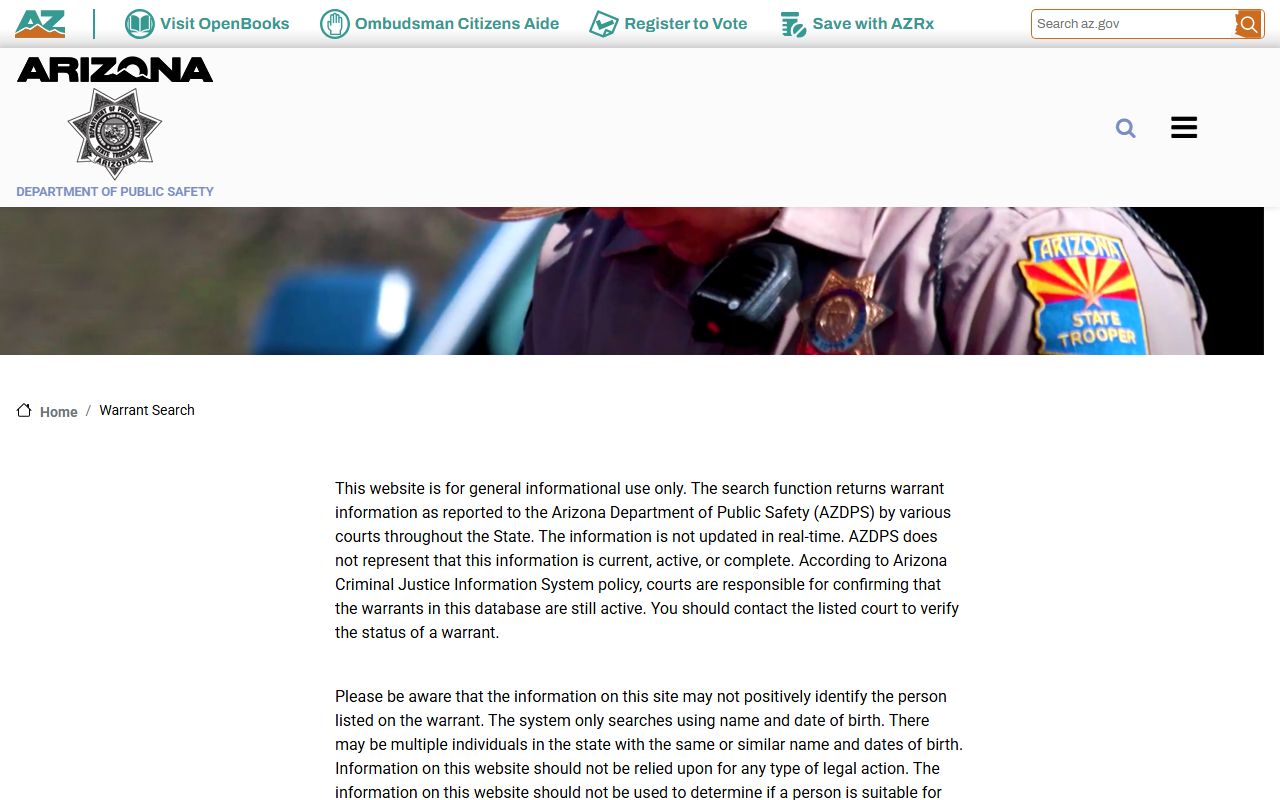
Note: The DPS warrant database does not update in real time, so always verify with the issuing court.
Types of Warrants in Arizona
Arizona courts issue several kinds of warrants. Each type serves a different legal purpose. The most common types you will see in Arizona are arrest warrants, bench warrants, and search warrants. Knowing the difference matters when you look up warrant records or try to resolve one.
An arrest warrant is issued when a judge finds probable cause that a person committed a crime. Police can use this warrant to take that person into custody. The warrant stays active until the person is arrested or the court cancels it. There is no time limit. An arrest warrant from ten years ago can still lead to an arrest today if it was never cleared. Under A.R.S. § 13-3911, a search warrant is a written order signed by a magistrate that directs a peace officer to search for property, persons, or items tied to a crime. Search warrants must be carried out within five days and returned to a magistrate within three business days after the search, per A.R.S. § 13-3918.
Bench warrants are different. A judge issues one when a person does not show up for court. This is called a failure to appear. The bench warrant lets police arrest the person and bring them to court. Many Arizona warrant records in the system are bench warrants tied to missed court dates. If you have a bench warrant, it will not go away on its own. You must address it through the court that issued it or face arrest at a traffic stop or other police contact.
Arizona Court Case Lookup
The Arizona Judicial Branch has an online case lookup system. It covers 153 of the 180 courts in the state. You can use it to find case info that may include warrant details.
Visit the Arizona Courts Public Access portal to search by name or case number. The system shows case type, filing dates, and court actions. If a warrant was issued as part of a case, you may see it listed in the case history. This tool does not show all warrants, but it gives you a way to dig into court records tied to a specific person or case. Some case types are not shown online. Juvenile cases, orders of protection, and injunctions against harassment are not in the public system due to privacy rules.
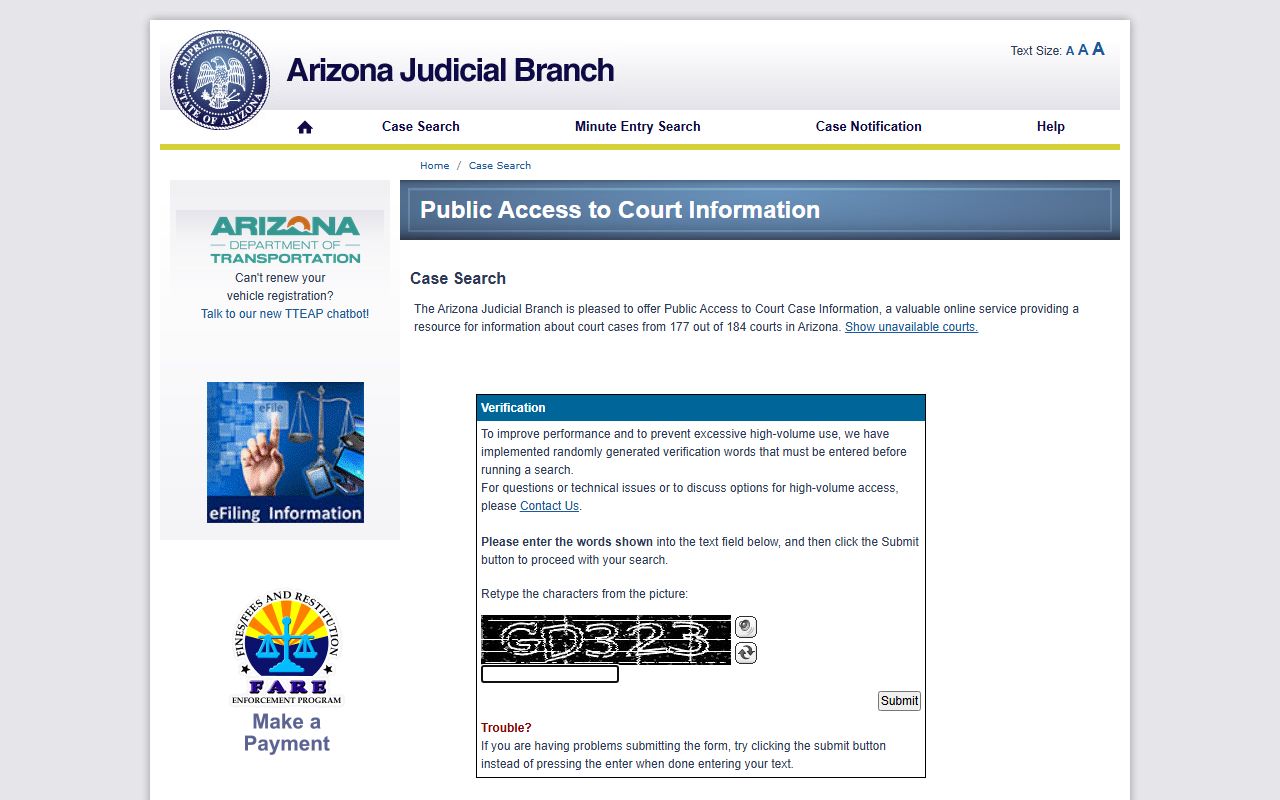
Each county Superior Court also has its own lookup tools. Maricopa County runs a docket search at its website. Pima County has a justice court case search. Some smaller counties rely on the statewide system. The level of detail varies by county, but most let you see if warrants were issued in a given case.
Arizona Criminal History Records
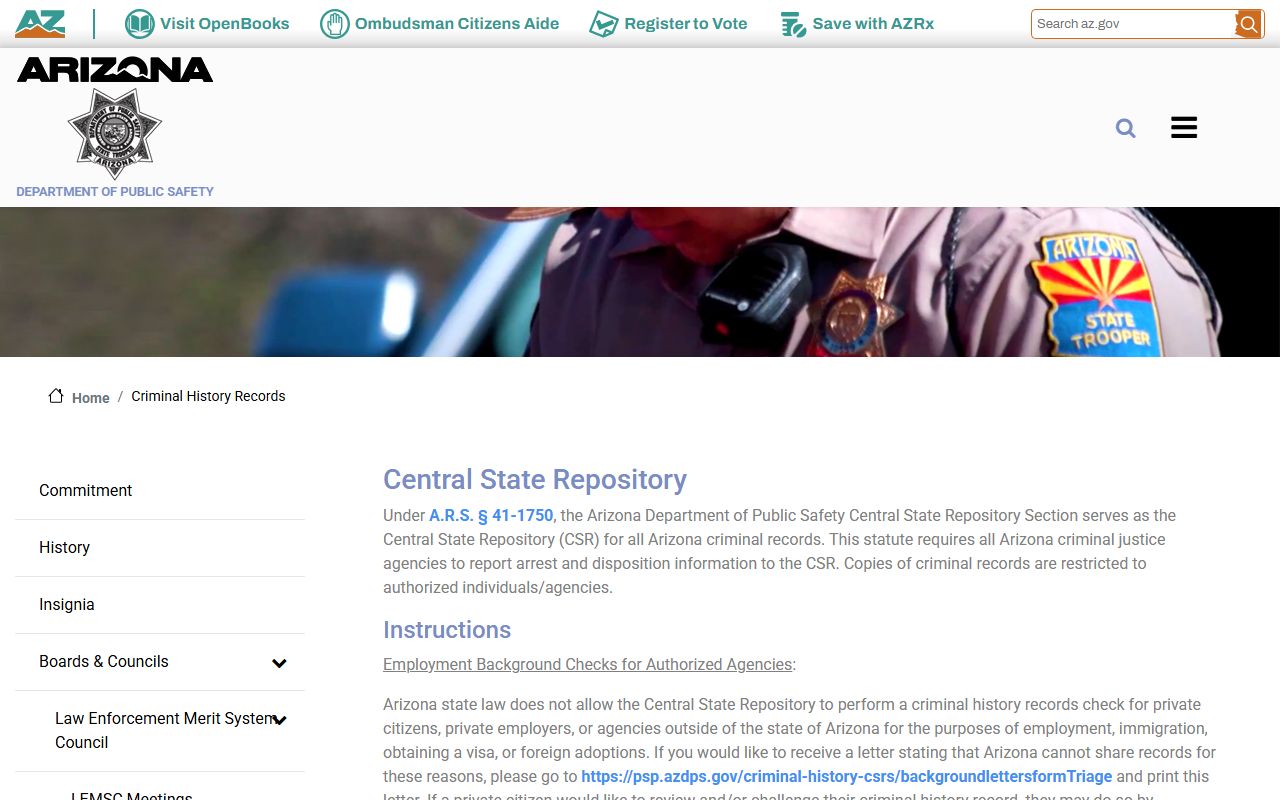
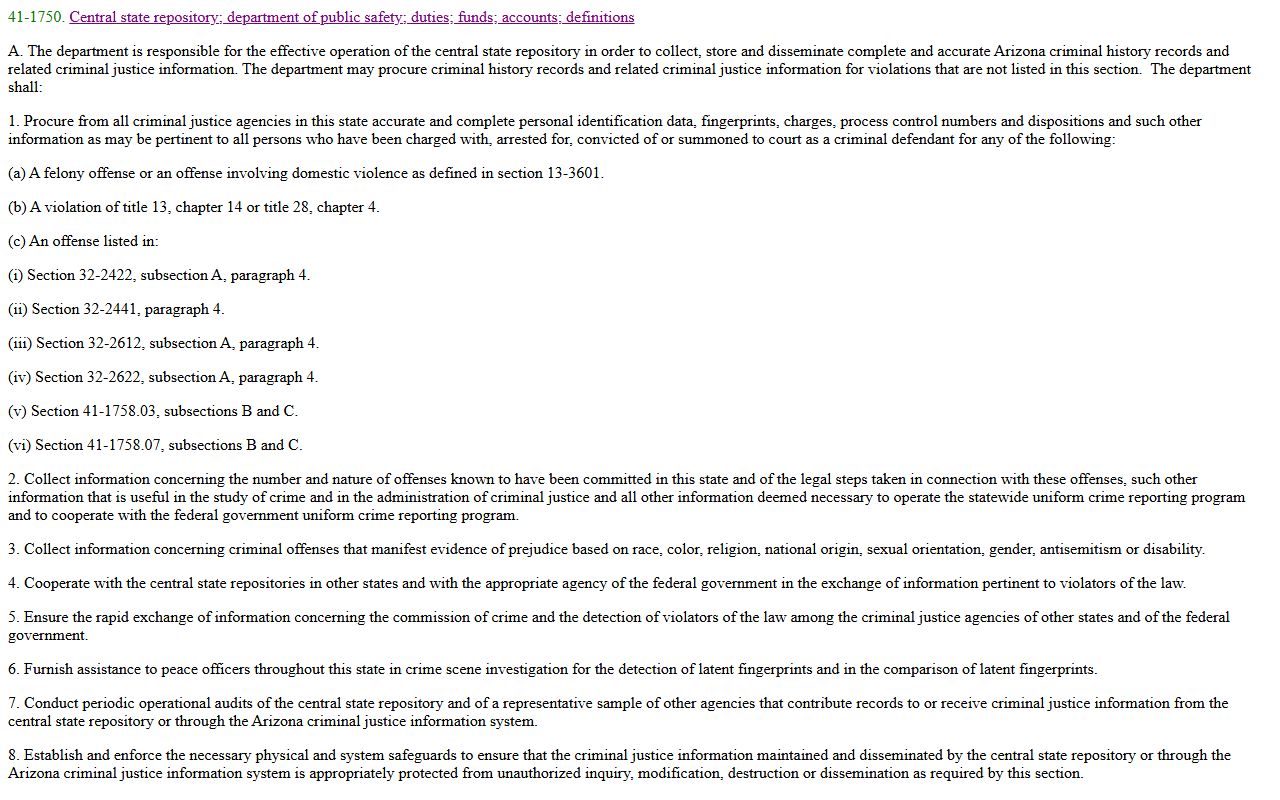
The Central State Repository at DPS holds all Arizona criminal records. Under A.R.S. § 41-1750, DPS must collect, store, and share complete criminal history data for the state. The repository has over three million active records and responds to more than 2.7 million requests each year. It runs around the clock, every day of the year.
You cannot get a criminal history check on yourself through DPS as a private citizen. Arizona law blocks the repository from doing checks for private people or employers in most cases. If you need a record review, you can submit a formal request with fingerprints. DPS will mail back any records tied to those prints within 15 days. This is useful if you want to see what shows up in your own criminal history in Arizona.
Some employers and agencies can request checks through DPS. They must have legal grounds to do so. If you need a fingerprint clearance card for a job, call the Applicant Clearance Card Team at (602) 223-2279. The card shows you passed a background check and is required for certain jobs in Arizona, especially those involving children or vulnerable adults.
Note: Private citizens cannot run criminal checks on others through the Central State Repository.
Requesting Arizona Warrant Records
Under A.R.S. § 39-121, public records in Arizona are open for inspection by any person during office hours. This includes many warrant records held by courts and law enforcement. You can file a public records request to get copies of these documents.
The DPS Public Records Unit handles requests for state-level records. You can reach them at (602) 223-2000, option 2, or email PublicRecords@azdps.gov. Their hours are 8 AM to 5 PM on weekdays. Mail requests go to PO Box 6638, Mail Drop 3240, Phoenix, AZ 85005-6638. There are fees for copies. Paper copies cost $9 for the first nine pages, then $0.10 per page after that. Email copies cost $9 with a 5 MB limit. A DVD costs $15, and a flash drive runs $20. Video requests cost $21.33 per half hour.
County sheriff offices also take records requests. Fees vary by county. Yuma County charges $3 for a case report and nothing for an adult arrest record. Pinal County charges $7.50 for reports up to 25 pages. Each county sets its own rates, so check with the local sheriff before you submit a request for warrant records in Arizona.
How to Resolve an Arizona Warrant
If you have a warrant in Arizona, you have options. The best path depends on the type of warrant and which court issued it. Acting fast can prevent an arrest at a bad time, like a traffic stop or airport screening.
For bench warrants tied to missed court dates, most courts let you file a motion to quash. This asks the judge to cancel the warrant and set a new hearing. You can send this motion by mail or email in some courts. Phoenix Municipal Court accepts motions at court@phoenix.gov. You can also go to the court in person and ask to be put on the calendar for a hearing. Some counties have special programs to help. Pima County runs a free warrant check line at 520-724-3310. They also have a "Clear My Warrant" program through adult probation at 520-724-9868 for people on probation with outstanding warrants.
Another option is to pay the bond amount. This clears the warrant and schedules a new court date. You can pay online, by mail, or at the courthouse. Phoenix lets you pay at the Maricopa County Sheriff's Office, 201 S. 4th Ave, 24 hours a day. Scottsdale charges a $100 warrant fee on top of the bond amount.
For arrest warrants tied to criminal charges, you should talk to a lawyer. These are more serious. Turning yourself in without legal advice can hurt your case. A lawyer can help you surrender safely and prepare for what comes next.
Important Warnings About Arizona Warrants
There are several things you should know before you search for or try to resolve a warrant in Arizona. These facts can save you trouble.
First, active warrants in Arizona can lead to driver's license suspension. The Motor Vehicle Department may block renewal or suspend your license if you have an open warrant tied to a traffic or criminal case. Second, some sheriff offices will not give warrant info over the phone. Yuma County Sheriff states clearly that they do not provide warrant information by telephone to the public. You must check online or in person there. Third, going to a sheriff's office to ask about a warrant in person can result in arrest if the warrant is yours. Some people have been taken into custody while trying to check on their status.
Keep these points in mind when searching Arizona warrant records:
- DPS data may lag behind actual court records
- Not all warrants are public due to sealed or confidential cases
- Warrant fees and bond amounts vary widely by court
- In-person inquiries at sheriff offices can lead to arrest
- A warrant does not expire on its own in Arizona
Arizona Warrant Laws
Arizona law sets out clear rules for how warrants are issued, served, and enforced. Several statutes govern this process. Understanding them helps you know your rights when dealing with warrant records in the state.
Under A.R.S. § 13-3915, a magistrate may issue a search warrant if probable cause exists. The magistrate must be satisfied that there is a valid reason to search. The law also allows for unannounced entry if the officer can show that announcing the search would put someone in danger or lead to destruction of evidence. When an officer makes an arrest under a warrant, A.R.S. § 13-3887 requires them to tell the person they are being arrested, why, and that a warrant exists. These rules protect both the public and law enforcement during warrant service in Arizona.
The Central State Repository statute, A.R.S. § 41-1750, gives DPS the job of running the statewide criminal records system. This includes keeping track of over 70,000 active warrants at any given time. Courts must report warrant data to DPS, but as noted, there can be delays in that flow. The law aims for complete and accurate records, but real-world gaps exist.
Key Arizona Warrant Contacts
Here are the main contacts for warrant searches and records in Arizona. These offices can help you find or resolve warrant issues at the state level.
The Arizona Department of Public Safety handles the state warrant database and criminal records. Their main office is at 2222 W. Encanto Blvd., Phoenix, AZ 85009. Phone: (602) 223-2000. The Public Records Unit can be reached at the same number, option 2, or by email at PublicRecords@azdps.gov. The Applicant Clearance Card Team is at (602) 223-2279 for fingerprint card questions.
For court-related warrant matters, contact the court that issued the warrant. The Arizona Judicial Branch main site at azcourts.gov has links to all county courts. Each county Superior Court and Justice Court has its own contact info. The statewide public access system is at apps.azcourts.gov/publicaccess.
If you need help paying for a lawyer, call the Arizona State Bar lawyer referral line. If you have a warrant and cannot afford a private attorney, ask the court about a public defender when you appear.
Browse Arizona Warrant Records by County
Each county in Arizona has a sheriff's office that handles warrants. Pick a county below to find local contact info and resources for warrant records in that area.
Warrant Records in Major Arizona Cities
Residents of major cities can check for warrants through their local municipal court or the county sheriff. Pick a city below to learn about warrant records in that area.